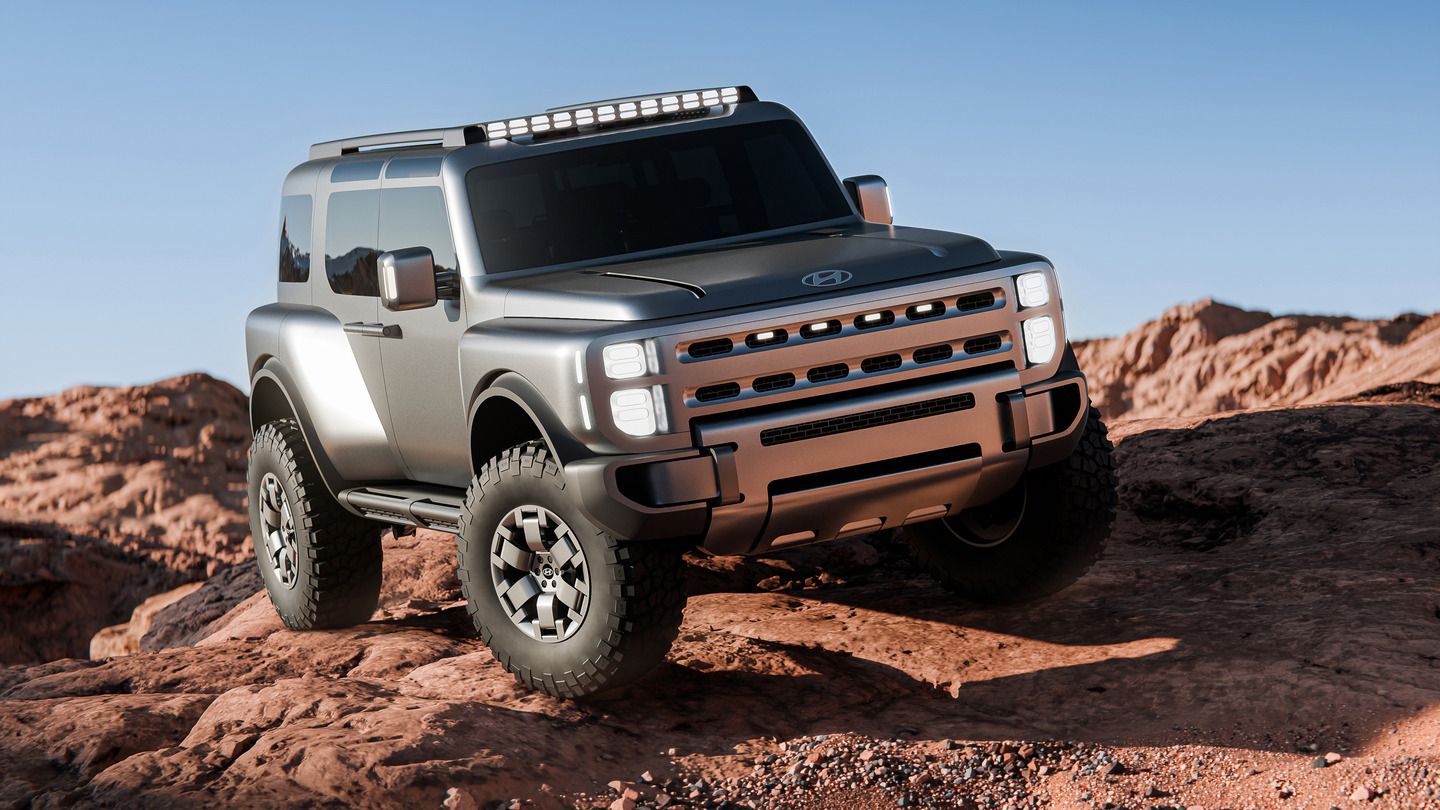
Hyundai just pulled back the curtain on its truck future. The Boulder Concept made its surprise debut at the 2026 New York International Auto Show, and it is not a production model - it is a design study that previews the brand's first fully-boxed body-on-frame platform. That platform will underpin a production midsize pickup truck arriving by 2030, designed and built in North America for North American buyers.
The Boulder Concept is an SUV in shape, but its ladder-frame-style construction and rugged proportions signal what Hyundai is building toward: a truck that can tow, haul, and handle serious off-road terrain. For buyers in southwestern Ontario who have been waiting for Hyundai to enter the midsize truck segment, this concept is the first concrete look at what is coming.
Explore Our New Hyundai Lineup
Discover the newest Hyundai models at Woodstock Hyundai, where elevated design, smart technology, and everyday versatility come together in a lineup built to stand out. Find a vehicle that feels fresh, refined, and ready for every drive.
Shop New Vehicles >
Art of Steel Design and Extreme Off-Road Capability
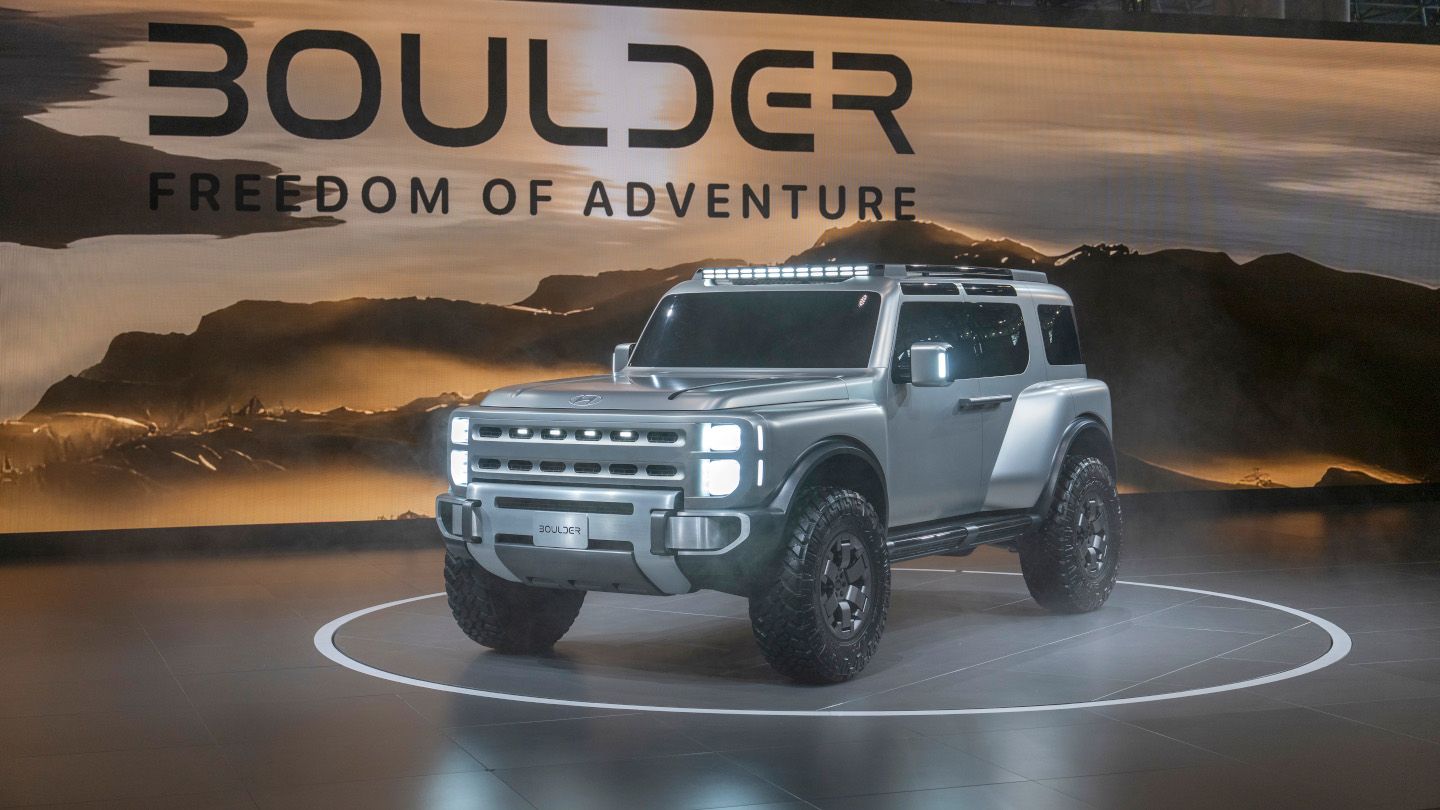
The Boulder Concept introduces Hyundai's "Art of Steel" design language, a sculptural approach inspired by the advanced steel technologies developed by Hyundai Steel. The design emphasizes strength and formability - flowing volumes paired with precise lines that give the vehicle a powerful, planted stance. The exterior is finished in Liquid Titanium, a metallic treatment that highlights the concept's bold, angular surfaces.
The upright two-box silhouette creates a commanding presence and excellent visibility. Dual safari-style fixed upper windows flood the cabin with natural light. Coach-style doors open wide for easy loading in both rows. A low-profile roof rack with steel webbing between the rails adds extra cargo-carrying capability without compromising the clean roofline.
The Boulder Concept rolls on massive 37-inch mud-terrain tires - 37x12.50R18 LT - mounted on rugged wheels. A tailgate-mounted full-size spare ensures you are covered on remote trails. Reflective tow hooks and door handles make the vehicle easier to spot in low light after a day in the backcountry.
Double-Hinged Tailgate and Functional Flexibility
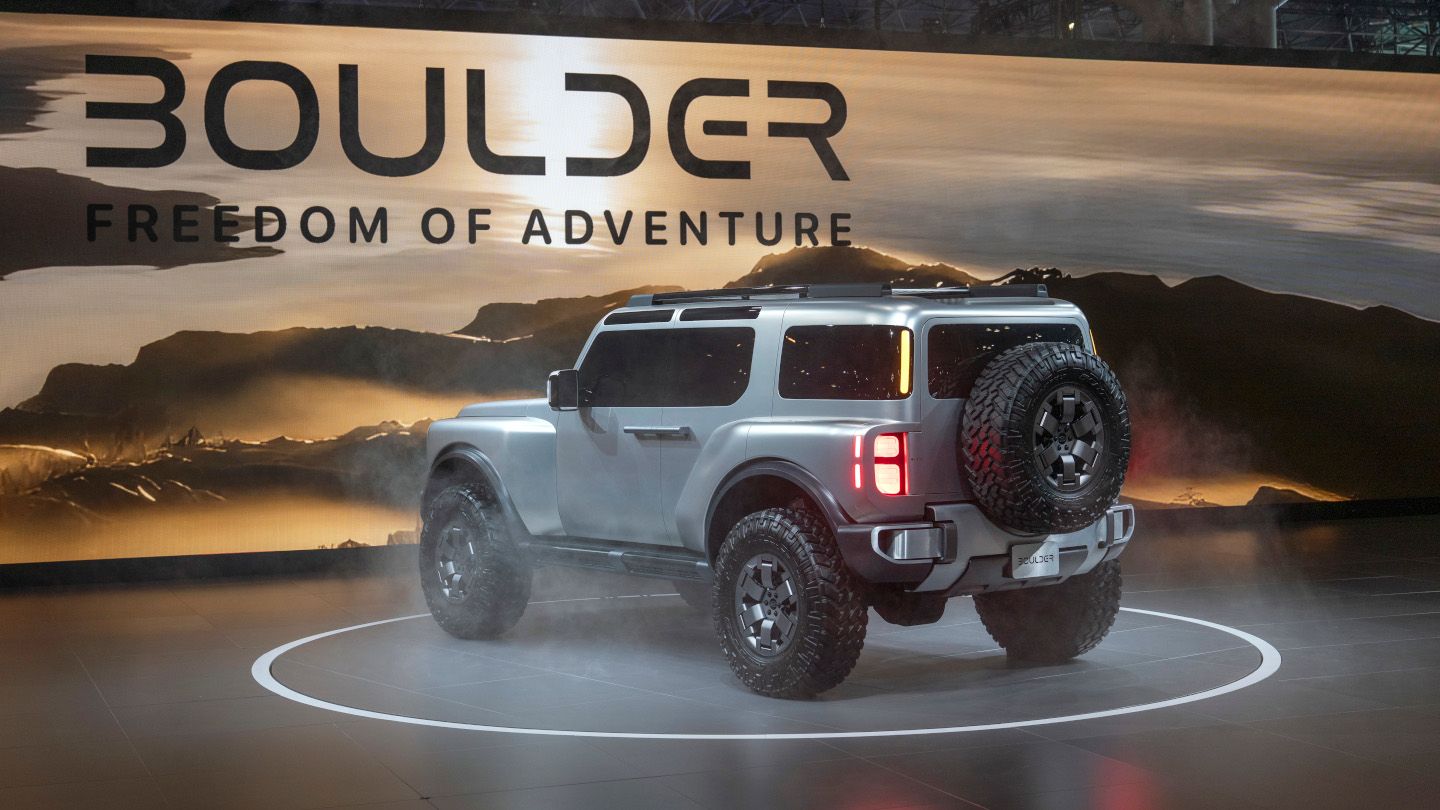
One of the Boulder Concept's standout features is its double-hinged rear tailgate, which opens from either side to accommodate different loading scenarios. A power drop-down rear window on the tailgate allows extra-long cargo to extend through the opening and provides flow-through ventilation when the vehicle is on the move.
The design team built the Boulder Concept to be a blank canvas for accessories. Mounting points and functional surfaces are designed to accept aftermarket gear - auxiliary lighting, storage systems, recovery equipment - so owners can customise the vehicle to match their specific needs.
Body-On-Frame Platform Built in North America
Hyundai has confirmed that its future body-on-frame vehicles will be designed, developed, and built in North America using Hyundai-produced U.S. steel. The production midsize pickup will compete in a segment that has long been dominated by established players, and Hyundai is entering with a platform engineered for towing, hauling, and off-road capability.
The Boulder Concept's ladder-frame-style construction is the foundation for this approach. Body-on-frame architecture separates the body from the frame, allowing the frame to absorb towing and payload stresses without transferring them to the cabin. This construction method has been the standard for trucks and rugged SUVs in North America for decades, and Hyundai is adopting it to meet the expectations of truck buyers who need genuine capability.
The concept's off-road design focus includes aggressive approach, departure, and breakover angles for navigating steep terrain. A software-driven real-time off-road guidance system acts as a digital spotter, helping drivers navigate obstacles with confidence.
Interior Built for Durability and Versatility
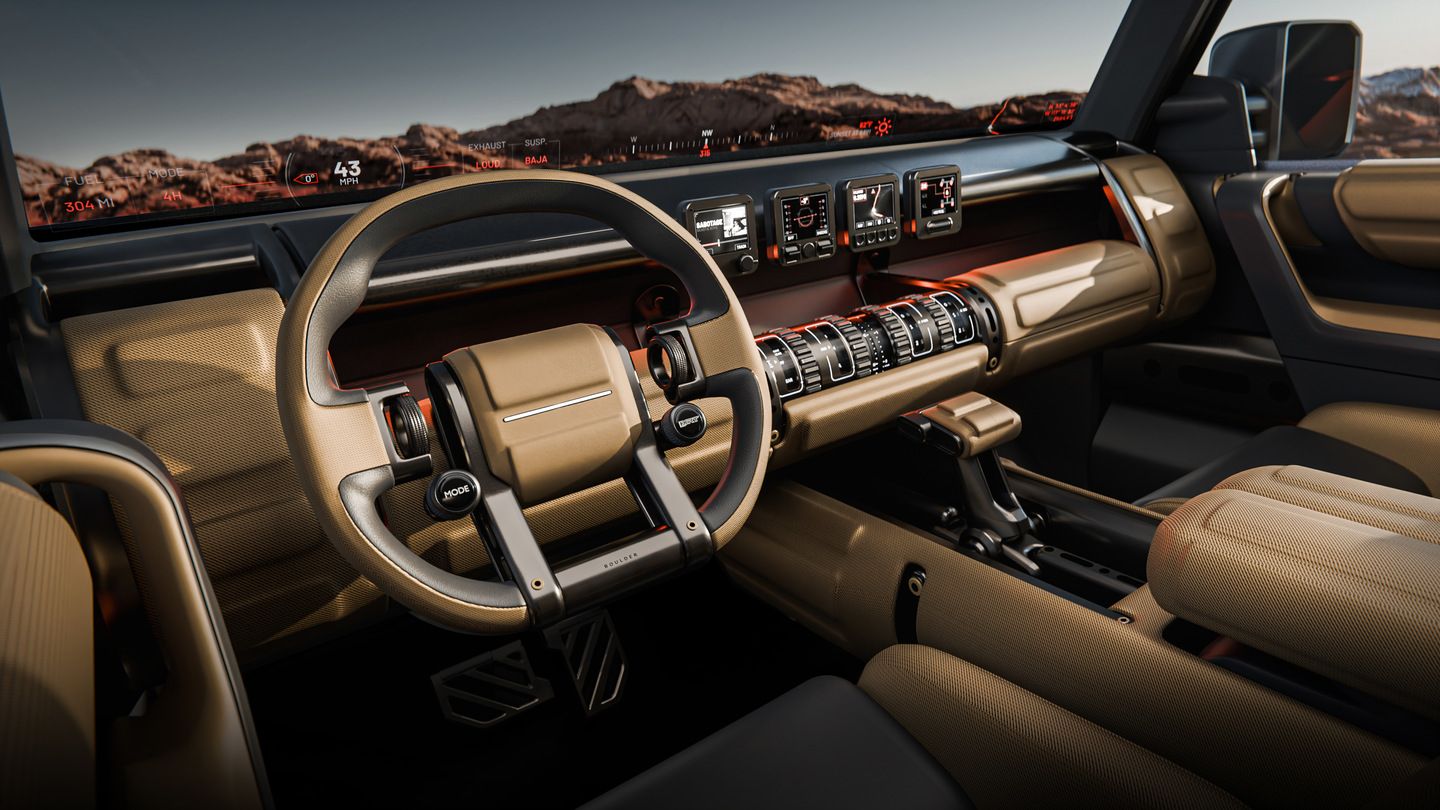
Inside, the Boulder Concept uses robust materials at key touchpoints - grab bars, door handles, and high-wear surfaces are designed to withstand heavy use. Physical knobs and buttons are positioned within easy reach, allowing the driver to adjust settings without taking their eyes off the trail.
The interior is configurable to support different activities. Unique fold-out tray tables provide a flat surface for a quick meal on the trail or a workspace for finishing a report in the field. The design prioritizes function over flash, with a focus on materials and controls that work in real-world conditions.
What This Means for Hyundai's Truck Future
The Boulder Concept is not a production vehicle, but it is a clear signal of Hyundai's direction. The brand is entering the midsize pickup segment with a body-on-frame platform designed to compete on towing, payload, and off-road capability. The production truck will be built in North America, using North American steel, and engineered for the work and adventure demands of North American buyers.
The Boulder Concept serves as a design study - a way to gauge customer interest and refine the approach before the production model arrives by 2030.
Why the Boulder Concept Matters for Southwestern Ontario
For buyers in the Woodstock area who have been waiting for Hyundai to offer a truck, the Boulder Concept confirms that the brand is serious about entering the segment. The midsize truck market is competitive, but Hyundai is developing a dedicated body-on-frame platform rather than adapting an existing SUV chassis. That approach suggests the production truck will be engineered to meet the expectations of buyers who need genuine towing and hauling capability.
The Boulder Concept's design language - Art of Steel - will likely influence the production truck's appearance, giving it a distinctive look in a segment where many competitors share similar proportions. The double-hinged tailgate and accessory-friendly design suggest Hyundai is thinking about how buyers actually use trucks, not just how they look on a showroom floor.
Explore the Hyundai lineup at Woodstock Hyundai in Woodstock to see how the brand is evolving. The Boulder Concept is a preview of what is coming, but the current Hyundai SUV and crossover lineup is ready to handle your daily driving needs today.
You might be interested in these blogs: