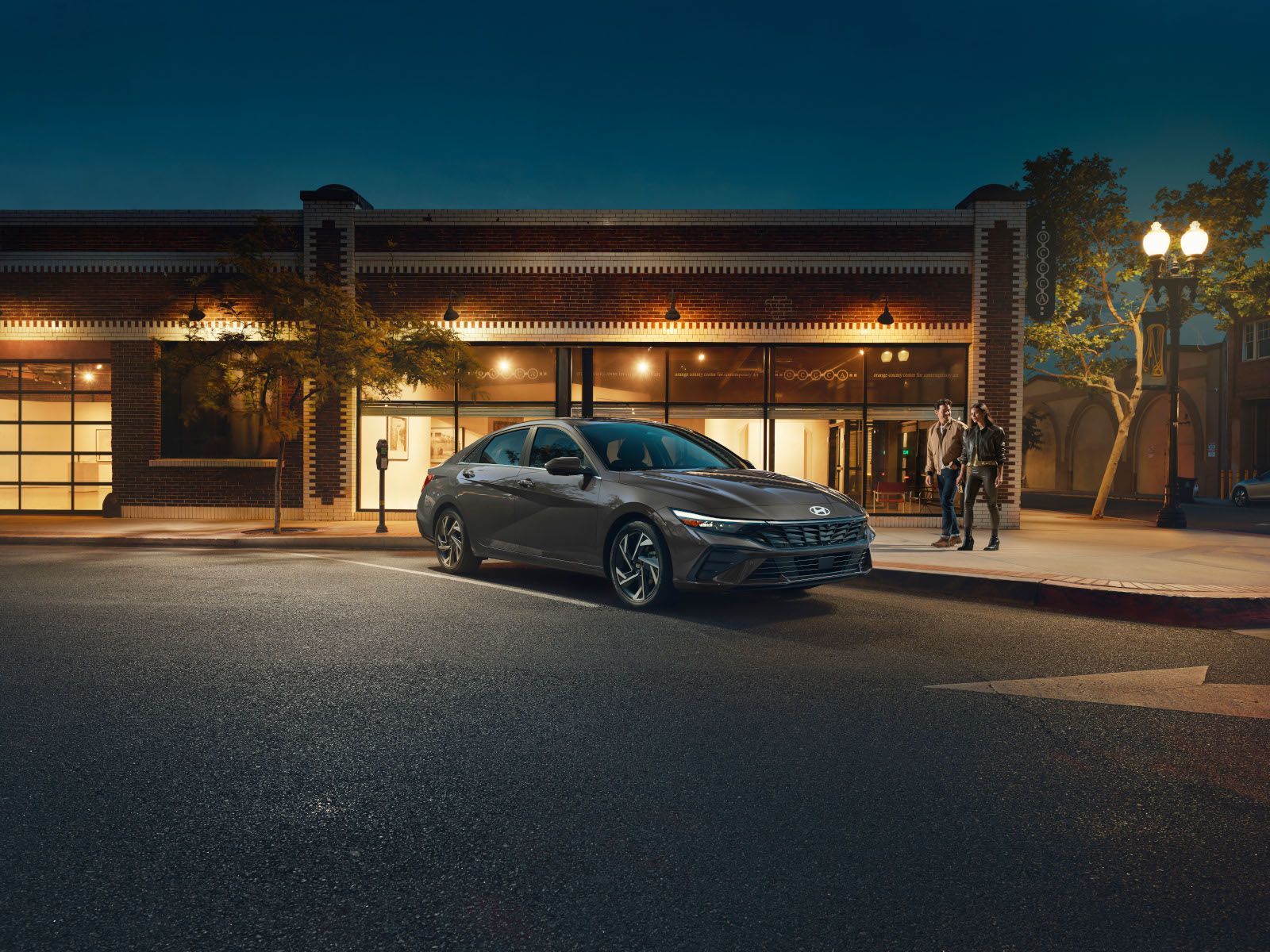
If you’re cross-shopping the Elantra lineup in Ontario and keep landing on the word “hybrid” without knowing what it actually changes day to day, you’re not alone. The efficiency numbers matter, but so does what’s happening under the hood to produce them.
Discover the Hyundai Elantra Hybrid
Spend less time thinking about fuel stops and more time enjoying the drive. The Hyundai Elantra Hybrid combines impressive efficiency with everyday comfort, making it a smart choice for Ontario commuters and drivers looking to get more from every kilometre.
Shop Hyundai Elantra Hybrid >
What the Elantra Hybrid System Actually Is
The Elantra Hybrid pairs a 1.6 L four-cylinder gas engine, making 104 hp on its own, with a 43 hp electric motor drawing from a 1.32 kWh, 240 V battery. Together the two produce a combined 139 hp and 195 lb-ft of torque. That’s less peak horsepower than the standard 2.0 L Elantra’s 147 hp, but noticeably more torque than the gas engine’s 132 lb-ft.
Power reaches the front wheels through a 6-speed EcoShift Dual-Clutch Transmission, a different setup than the Intelligent Variable Transmission (IVT) used on the gas trims. The DCT swaps gears more like a conventional manual, which is part of why the hybrid feels more responsive off the line than the torque figures alone suggest.
How the Motor and Engine Work Together
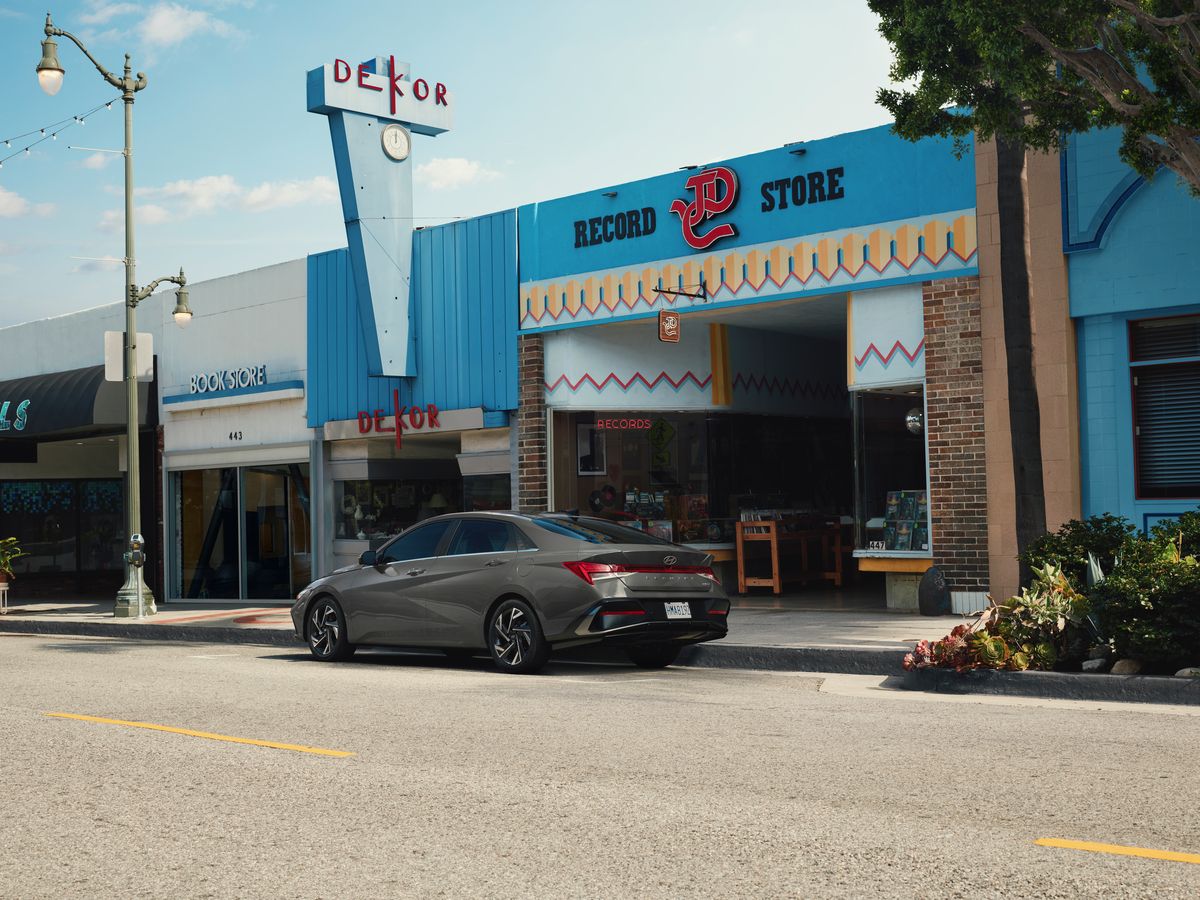
In everyday driving, the electric motor does more of the work at low speeds, when a gas engine is normally least efficient. The gas engine steps in as speed builds and load increases, and the two blend output through the DCT rather than handing off with a jolt.
This is where the extra torque shows up. The Elantra Hybrid’s 195 lb-ft beats the gas Elantra’s 132 lb-ft, and that torque arrives early, because the electric motor contributes 125 lb-ft on its own from a stop. It’s why the hybrid never feels like it’s straining to build speed at a green light, even with fewer horsepower on paper than the base engine.
The drivetrain stays front-wheel drive, same as every Elantra, so there’s no added driveline complexity to manage. The suspension is where the Hybrid quietly changes: it swaps the gas Elantra’s rear torsion axle for a multi-link independent rear suspension, and it sits with 140 mm of ground clearance versus 135 mm on the gas car.
Why the Efficiency Numbers Matter in Real Driving
This is where the hybrid earns its name. The Elantra Hybrid posts 4.8 L/100km city, 4.5 L/100km highway, and 4.7 L/100km combined. The gas Elantra, by comparison, runs 7.5 L/100km city, 5.9 L/100km highway, and 6.8 L/100km combined.
|
Powertrain
|
Combined
|
|
Elantra Hybrid 1.6L
|
4.7 L/100km
|
|
Elantra 2.0L
|
6.8 L/100km
|
The gap is widest in the city, which lines up with how hybrids work: the electric motor takes over more often in stop-and-go traffic, where a pure gas engine spends the most fuel restarting from a stop. For a daily commute through Ontario traffic, that’s the scenario where the Hybrid’s advantage compounds trip after trip.
The Elantra Hybrid does carry a smaller fuel tank, 42 L against 47 L on the gas car. On paper that sounds like a downside, but the lower consumption rate more than makes up for it: burning less fuel per 100 km means fewer stops overall, even with less fuel on board to start with. For anyone doing regular highway runs across the province, that translates to fewer detours off the route to refuel.
Who the Hybrid Is Actually Built For
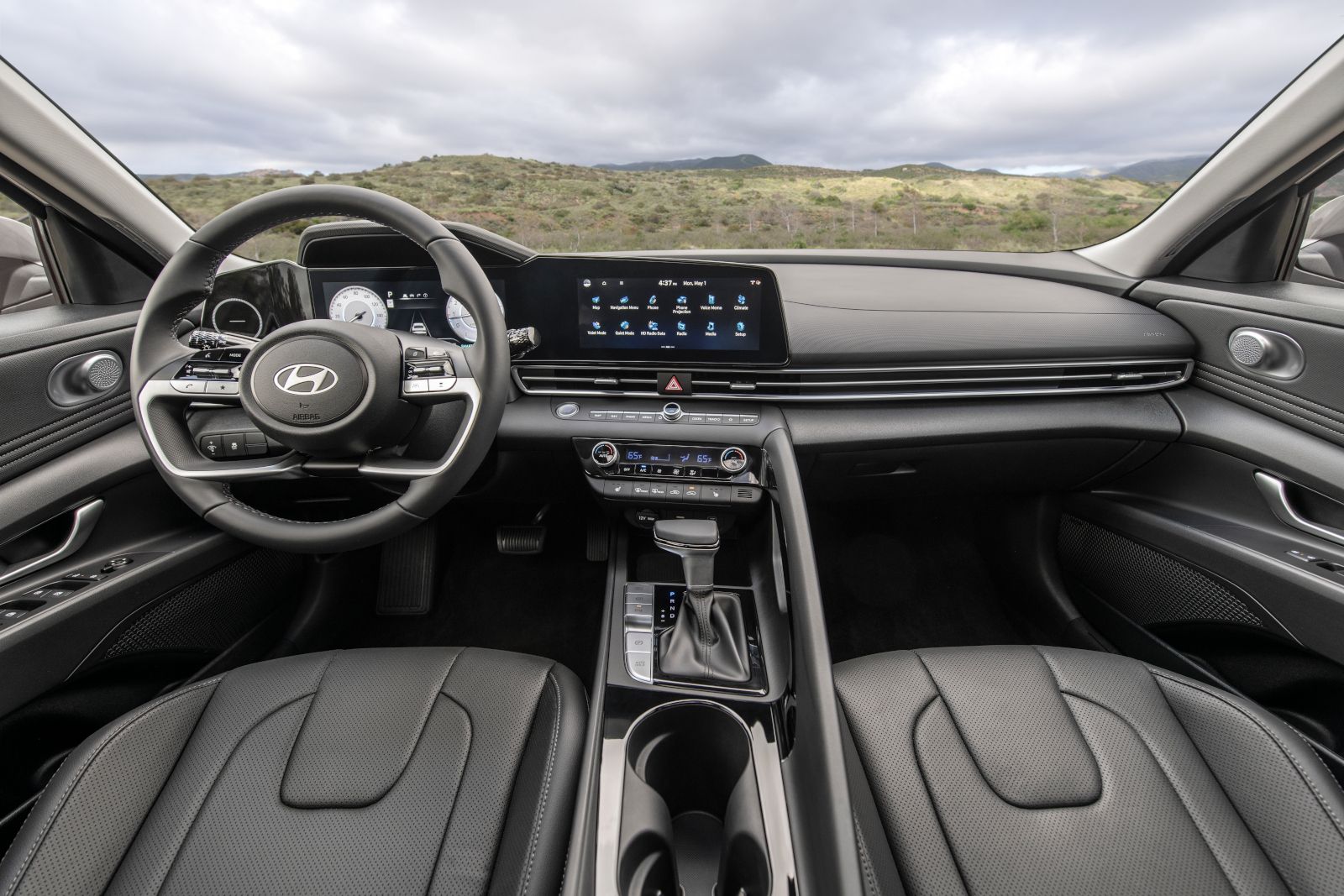
The Elantra Hybrid is only offered on the Luxury trim, so choosing it also means stepping into that trim’s equipment: leatherette seating, a wireless charging pad, Bose premium audio with 8 speakers, a 10.25-inch digital cluster paired with a 10.25-inch touchscreen, and Highway Driving Assist with Adaptive Cruise Control that handles stop-and-go traffic on its own.
That last feature pairs naturally with the powertrain’s strength. A car that already smooths out stop-and-go driving with its hybrid system, paired with cruise control that manages stop-and-go traffic for you, is built around the same commute it’s most efficient in.
If your driving is mostly highway at steady speed, the gap between hybrid and gas narrows, 4.5 L/100km versus 5.9 L/100km highway is still a real difference, but nowhere near the city split. Commuters doing mixed city driving, short trips, and regular stop-and-go get the most out of what this drivetrain is designed to do.
Buyers who want the punchier 201 hp of the turbocharged N Line Ultimate, or the lowest sticker among trims, are better served by the other engines in the lineup; the Hybrid’s case is built entirely around what it does at low speed and in traffic.
Getting Behind the Wheel of the Elantra Hybrid
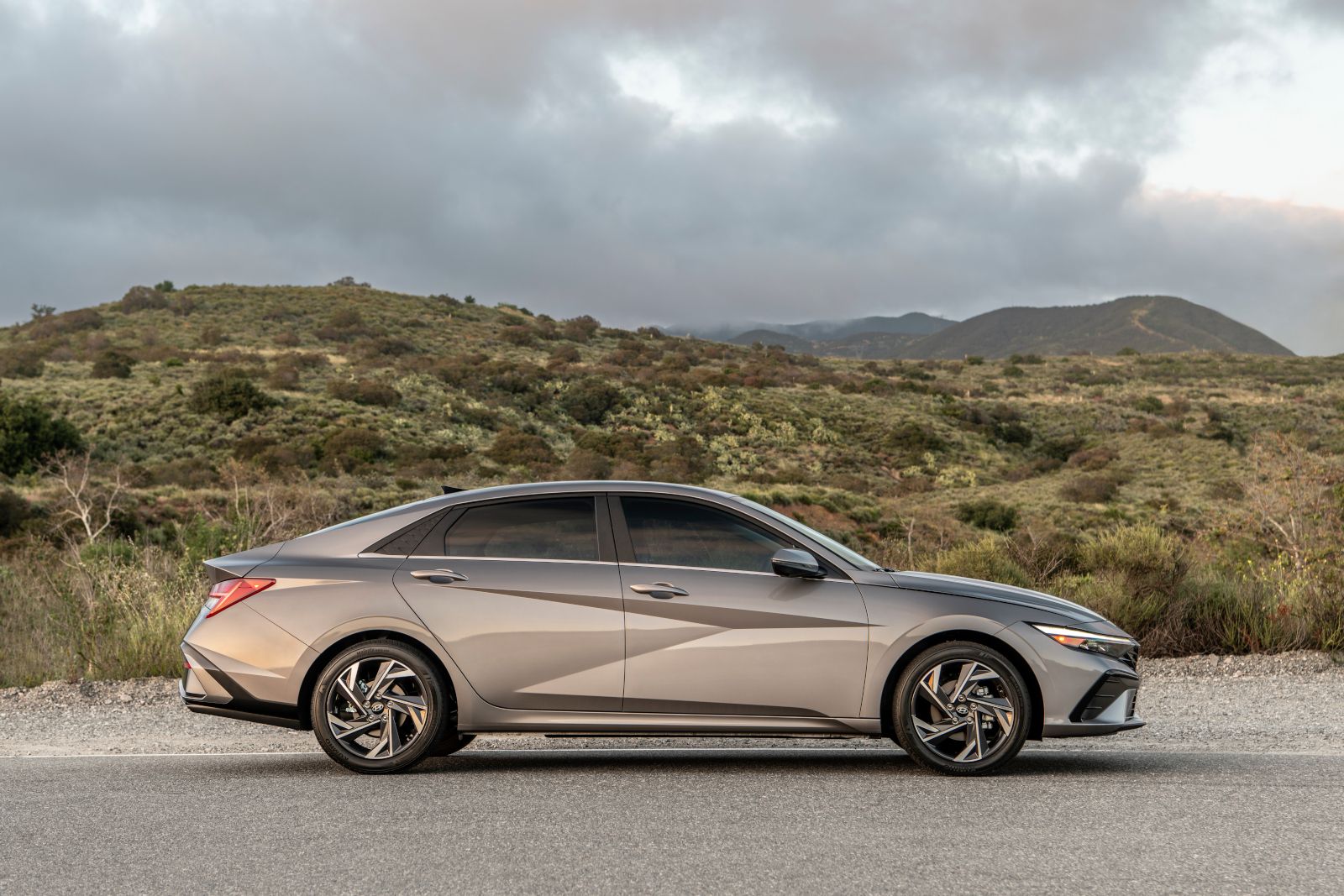
The Elantra Hybrid’s 1.6 L engine and electric motor combination delivers 4.7 L/100km combined while keeping the drivability of a standard sedan, no plug, no charging routine, just a front-wheel-drive car that uses less fuel where Ontario drivers spend the most time: in traffic.
Visit Woodstock Hyundai in Woodstock to see the 2026 Elantra Hybrid in person and compare its drivetrain and efficiency against the rest of the Elantra lineup.
You might be intersted in these blogs: